AiMi Research Program

From curiosity to rigorous, original research.

A mentor-guided program for students ready to investigate an important question, work with evidence, and communicate findings with academic integrity.

Who it is for

Ready to move beyond the assignment.

Designed for motivated high school students who want to move beyond classroom assignments and learn how original research is developed, evaluated, and communicated. Appropriate preparation depends on the selected project.

Admission is selective. Topic acceptance depends on feasibility, appropriate preparation, responsible research design, and verified mentor availability.

Deep mentor involvement

A professor stays close to the work.

Each project has a professor mentor—from defining a feasible question and choosing appropriate methods to reviewing evidence, challenging interpretation, strengthening drafts, and preparing the student for external review or presentation. Professor mentors teach and evaluate; students make the decisions and own the work.

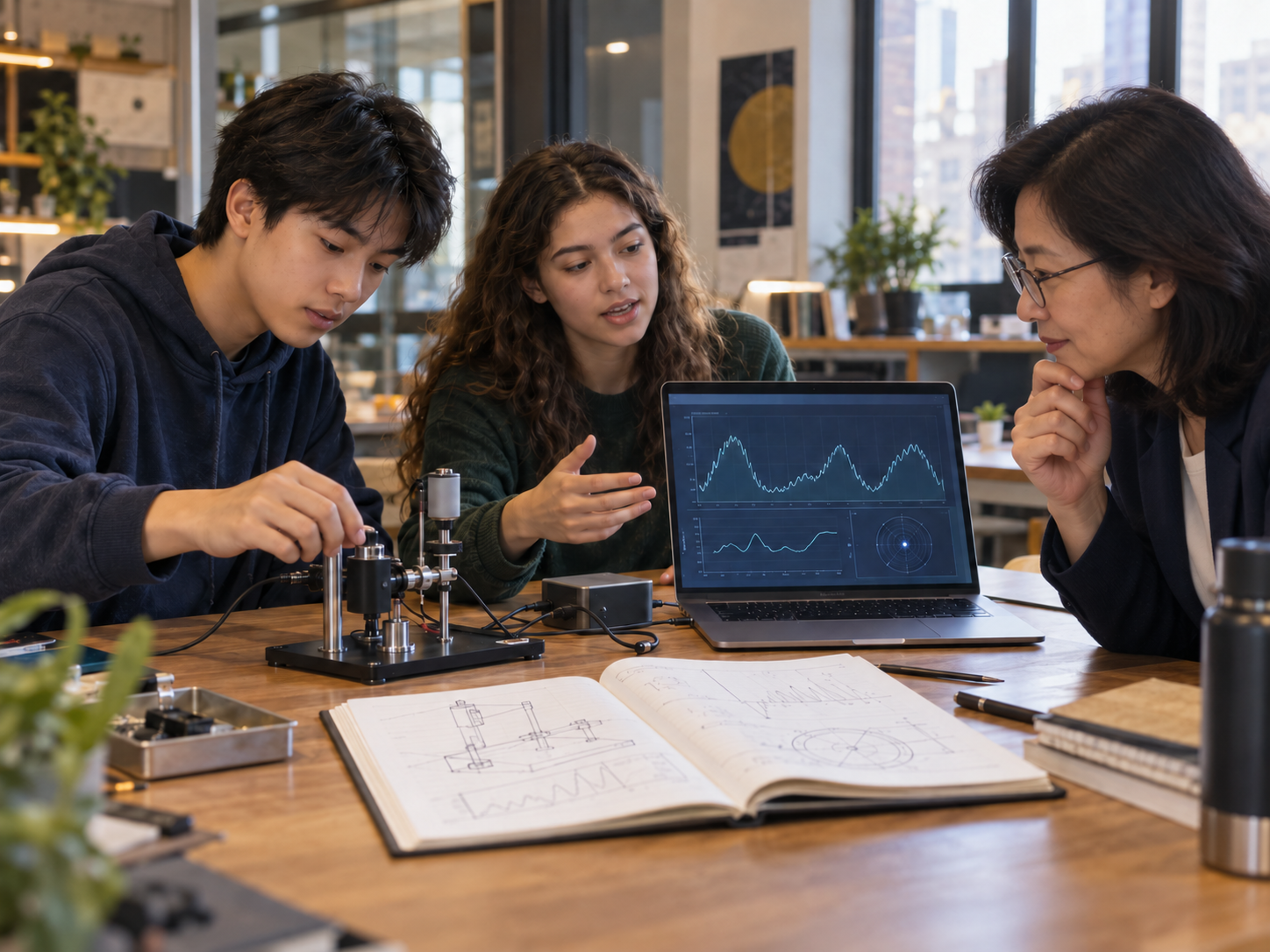
Students and a professor mentor discussing an experiment and its data
Question the result. Test the interpretation. Refine the work.
  • 01Topic, feasibility, and research-question definition
  • 02Literature, data, and method design
  • 03Ethics, safety, and rules checks
  • 04Recurring analysis and draft review
  • 05Presentation or submission-readiness assessment
  • 06Final evaluation and next-step recommendation

Professor mentors are matched by subject and method, not merely by affiliation. A mentor’s institutional affiliation does not imply that the institution sponsors or endorses the program.

Six Academic Standards

Rigor is built into every milestone.

The standards protect student ownership, research integrity, and the credibility of the final work.

  1. 01

    Research Ethics

    Students follow appropriate standards for sources, attribution, data use, authorship, conflicts, privacy, safety, and competition rules. Projects requiring formal approval may not proceed without it.

  2. 02

    Student Ownership

    Students understand, perform, document, and defend their own work. Mentors teach, review, question, and guide, but do not write or fabricate work.

  3. 03

    Mentor Review

    Mentors review intellectual logic, feasibility, methods, evidence, limitations, and communication throughout the project.

  4. 04

    Research Milestones

    Projects advance through defined gates for question, literature, methods, ethics, analysis, interpretation, draft, and presentation readiness.

  5. 05

    Final Evaluation

    Evaluation considers rigor, ownership, reasoning, execution, response to feedback, communication, and next-step readiness.

  6. 06

    Selective Admission

    Admission depends on readiness, commitment, feasibility, mentor fit, timing, and the Academy’s ability to support the work responsibly.

Research process

From a broad interest to a defensible contribution.

  1. 01

    Question Formation

    Move from a broad interest to a focused, researchable question.

  2. 02

    Literature & Context

    Understand prior work, evidence gaps, and appropriate sources.

  3. 03

    Method Design

    Select data, analytical approaches, evaluation criteria, or experimental logic.

  4. 04

    Analysis & Interpretation

    Conduct the work, examine limitations, and separate evidence from assumption.

  5. 05

    Research Communication

    Produce and revise a paper, poster, technical report, presentation, or suitable artifact.

Formal outcomes & next-stage pathways

Where can the work go?

The capstone is the guaranteed educational destination. Academy showcases and external opportunities are distinct next stages, each with its own readiness and eligibility gate.

Core capstone

Every student builds a substantive final body of work.
Research

Research capstone

A defensible body of original work matched to the student’s question, methods, and available evidence.

  • Manuscript or technical report
  • Poster, code, or interactive demonstration

Built into the program; final format follows the project.
Academy showcase

Students communicate and defend the work for a real audience.
Research

AiMi Research Symposium

A structured setting to explain the question, methods, findings, limitations, and next steps to an audience.

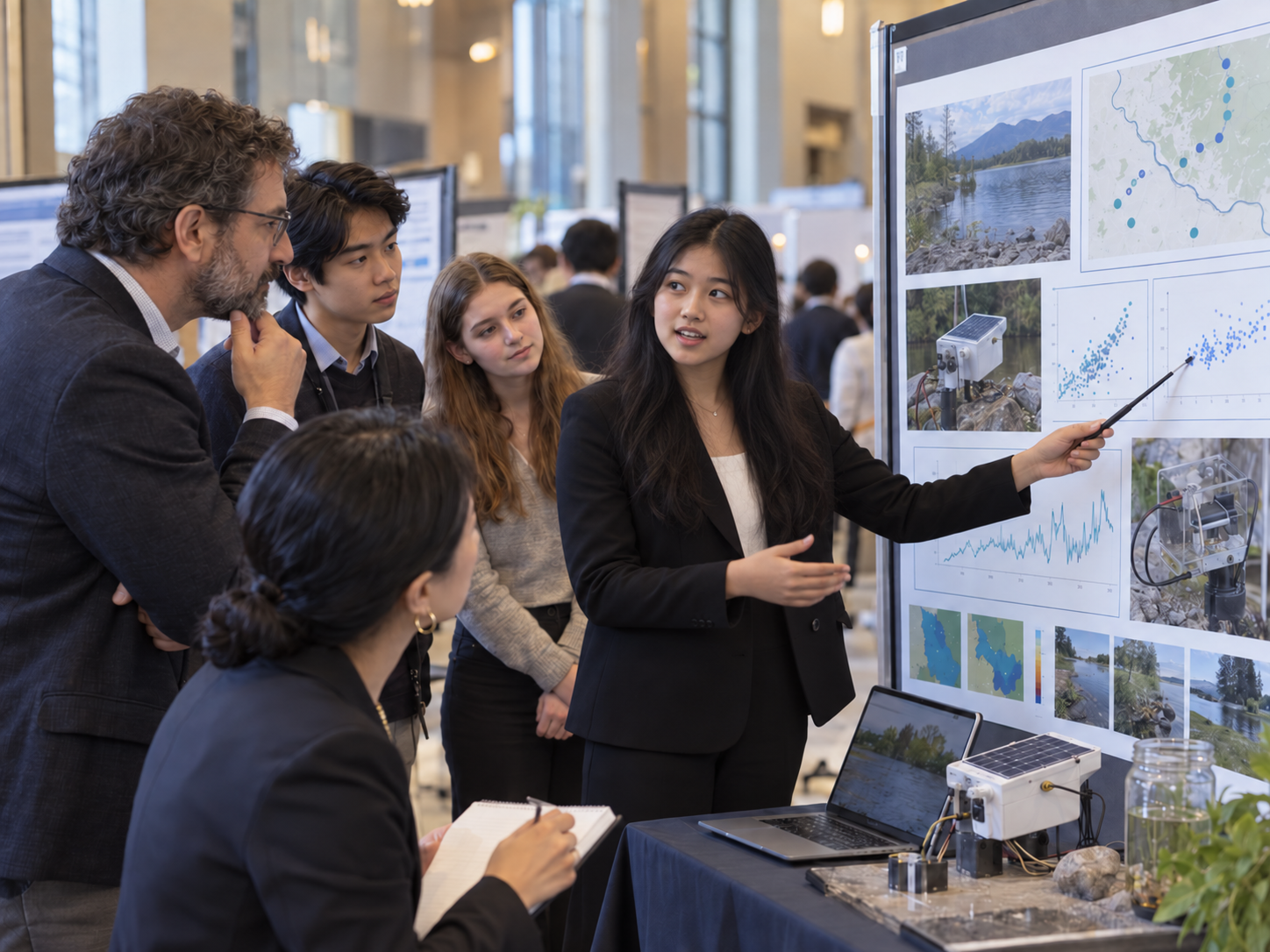
A student presenting a research poster to mentors and an audience
  • Research talk or poster
  • Live questions and student defense

Available when a symposium is scheduled for the cohort.

External pathway

Qualified projects may be prepared for a third-party venue.
Research

Science fair pathway

Preparation for an appropriate local, regional, or Society-affiliated fair after an eligibility and rules review.

  • Submission-ready materials
  • Display, presentation, and interview practice

Conditional on eligibility, approvals, timing, and project readiness.

Review the official pathway
Research

Conference or journal pathway

Mentor-guided preparation for academic review when the work has an appropriate venue, contribution, and evidence base.

  • Abstract, poster, talk, or manuscript
  • Authorship, citation, and submission checks

Submission, acceptance, presentation, and publication are separate verified states; none is guaranteed.

Project format and external submission opportunities depend on topic, student readiness, timeline, data availability, and third-party eligibility rules. Participation does not guarantee publication, competition entry, awards, or college admission.

Flexible, milestone-based delivery

The format follows the work.

Current cohort dates, duration, meeting frequency, and capacity will be published only after they are confirmed.

01

Individual mentorship

A deeply mentored path shaped around a feasible question, methods, and student readiness.

02

Small cohort

Shared foundations and critique with project-specific mentor guidance.

03

Online or school-embedded

Live mentorship and milestones delivered online or within a selected partner school.

Bring us the question you cannot stop thinking about.